
How Is a Garage Floor Coating Installed?
Polyaspartic vs Epoxy
If you’re considering a garage makeover, you’ve probably heard of epoxy and polyaspartic floor coatings. While both aim to protect and improve concrete, they are not created equal, especially in hot, humid climates like Bluffton, Hilton Head, and Savannah. So what’s the real difference? Let’s break it down.
The Professional Concrete Coating Process from Start to Finish
When homeowners start researching garage floor coatings, one of the most common questions they search on Google is:
“How are garage floor coatings installed?”
A properly installed polyaspartic floor coating system is not simply paint rolled onto concrete. It’s a multi-step process designed to create a durable surface that can handle vehicles, humidity, and everyday use.
At Floor Shield Lowcountry, we install 100% polyaspartic concrete coating systems for garages, patios, and pool decks across Hilton Head, Bluffton, and the surrounding Lowcountry. Below is the process we use for every installation.
Why Is Concrete Inspection Important Before Installing a Garage Floor Coating?
Every project begins with evaluating the condition of the concrete slab.
Concrete varies greatly depending on age, moisture exposure, and how it was originally finished. During inspection we check for:
cracks or structural damage
moisture issues
surface contaminants
previous coatings or sealers
concrete hardness using a Mohs hardness test
Testing the hardness of the concrete allows us to determine the correct diamond tooling and grinding method needed to properly prepare the surface.
Concrete slabs can vary significantly in density, and adjusting the preparation method ensures the coating system bonds properly.
Proper evaluation is critical because the condition and hardness of the concrete determine how well a garage floor coating will perform over time.
Why Is Concrete Grinding Necessary Before Garage Floor Coating?
One of the most important steps in professional garage floor coating installation is mechanical surface preparation.
At Floor Shield Lowcountry we use industrial diamond grinding equipment to mechanically grind the concrete surface.
This process:
opens the pores of the concrete
removes contaminants and weak surface layers
creates the proper profile for coating adhesion
Many coating failures occur because this step is skipped or done improperly. Without proper grinding, coatings may peel, bubble, or delaminate over time.
Mechanical grinding is what separates professional concrete coatings from quick DIY solutions.
How Are Cracks and Imperfections Repaired Before Coating?
After grinding the concrete, we repair any cracks or imperfections in the slab.
Specialized fillers are used to:
repair expansion cracks
fill surface voids
smooth imperfections in the slab
This ensures the finished floor has a clean, uniform appearance.
What Is a Polyaspartic Base Coat?
Once the surface is properly prepared, we apply the polyaspartic base coat.
Polyaspartic coatings are ideal for the Lowcountry climate because they are:
UV stable (won’t yellow)
moisture resistant
extremely durable
fast curing
Unlike many traditional epoxy garage floor coatings, polyaspartic systems are designed to withstand heat, humidity, and sunlight.
Why Are Decorative Flakes Added to Garage Floor Coatings?
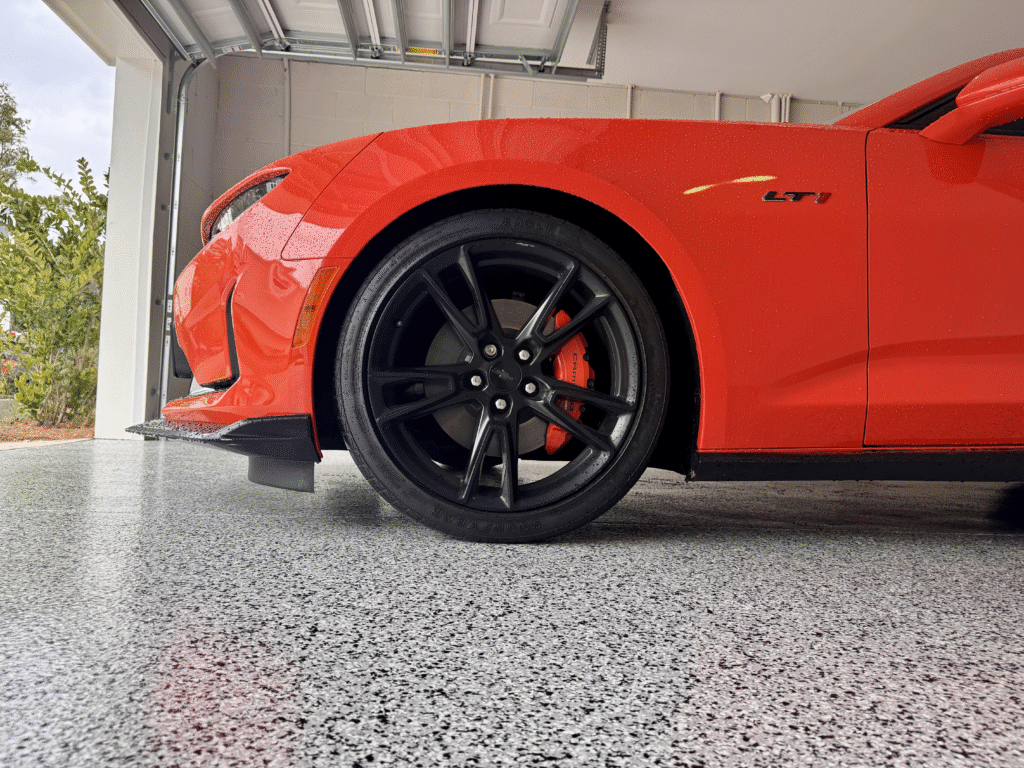
While the base coat is still wet, decorative vinyl flakes are broadcast across the entire floor.
Decorative flake systems provide:
texture for slip resistance
visual depth and color
a more durable surface
Flake floors are one of the most popular options for garage floor coatings in Hilton Head and Bluffton because they combine durability with a clean finished look.
What Happens Before the Final Top Coat?
After the base coat cures, the floor is scraped and vacuumed.
This removes loose flakes and creates a smooth surface before the final protective layer is applied.
This step ensures the floor has a consistent texture and professional finish.
How Long Does Garage Floor Coating Installation Take?
One of the biggest advantages of polyaspartic floor coating systems is their fast curing time.
Most residential garage floors can be installed in just one day, allowing homeowners to return to normal use quickly.
This is one reason polyaspartic coatings have become increasingly popular compared to traditional epoxy systems.
Common Questions About Garage Floor Coatings
Do garage floor coatings peel?
How long do polyaspartic garage floors last?
When professionally installed and properly maintained, a polyaspartic garage floor coating can last 20 years or more in a residential setting.
Most high-quality polyaspartic coating systems are designed to last 15–20 years, and many installations exceed that lifespan depending on traffic, maintenance, and proper surface preparation.
One of the reasons polyaspartic coatings last so long is their UV stability, flexibility, and strong adhesion to properly prepared concrete. Unlike traditional epoxy coatings, polyaspartic systems resist yellowing, cracking, and peeling over time.
When installed on properly prepared concrete — including mechanical grinding and concrete hardness testing — a polyaspartic floor becomes a long-term solution designed to handle vehicles, moisture, and everyday garage use.
How long should you wait before driving on a newly coated garage floor?
One of the most common questions homeowners ask after installation is how long they should wait before driving on their new garage floor coating.
While polyaspartic coatings cure much faster than many traditional epoxy systems, we recommend allowing 48 to 72 hours before parking vehicles on the surface. This additional time allows the coating system to fully cure and reach its maximum strength.
Light foot traffic is typically permitted after approximately 4 to 5 hours, depending on temperature and humidity conditions. Allowing the full curing window before vehicle use helps ensure the floor performs as intended for years to come.
Following these guidelines helps protect the finish and ensures the long-term durability of the garage floor coating system.
Are polyaspartic coatings better than epoxy?
Polyaspartic coatings are generally more UV stable and faster curing than many epoxy systems, making them well suited for outdoor or high-humidity environments like the Lowcountry.
Garage Floor Coatings in Hilton Head and Bluffton
Floor Shield Lowcountry installs garage floor coatings, patio coatings, and pool deck coatings throughout:
Hilton Head Island
Bluffton
Hardeeville
Okatie
the surrounding Lowcountry communities
Every floor we install begins with proper concrete preparation and a 100% polyaspartic system designed for coastal conditions.
Considering a Garage Floor Upgrade?
If you’re researching garage floor coating in Hilton Head or Bluffton, we’re always happy to answer questions about the installation process.
